The Hotel Workout Mistake That Quietly Wastes Your First Two Days of Any Trip
Quick Answer: The biggest hotel workout mistake is planning a routine that assumes full recovery and normal sleep — travel days one and two involve dehydration, time zone disruption, and interrupted sleep, so a workout built for home intensity gets skipped because it feels disproportionately hard. Plan a scaled-down version specifically for arrival days.
You land, unpack, and tell yourself you’ll work out tomorrow. Tomorrow you’re still jet-lagged and tell yourself the same thing. By day three the whole trip has slipped by without a single session.

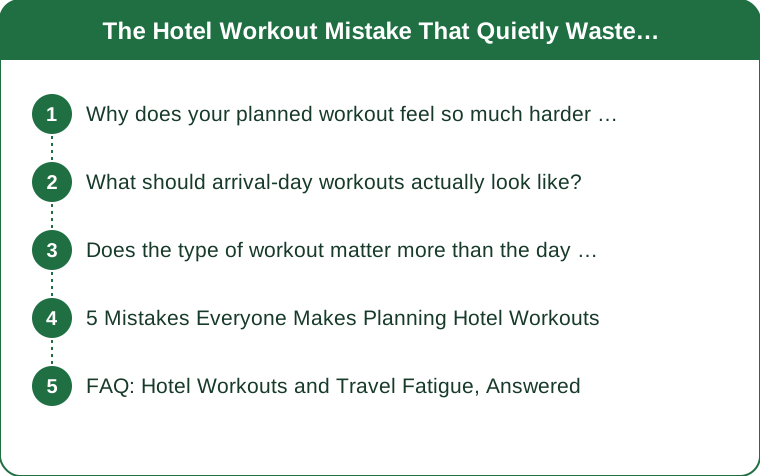
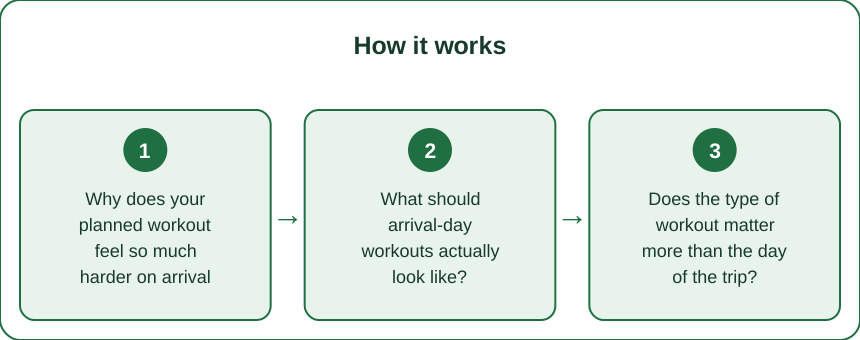
Why does your planned workout feel so much harder on arrival day?
Flying causes mild dehydration and disrupted sleep even on short trips, both of which measurably reduce perceived energy and grip strength for 24-48 hours after landing. A workout that would take 30 minutes at home can feel like it needs an hour of willpower you don’t have yet.
This mismatch between your planned intensity and your actual recovered state is what causes the skip — not a lack of discipline.
What should arrival-day workouts actually look like?
Cut planned volume by half and drop intensity to a 6/10 effort for the first 24-48 hours — think a 15-minute bodyweight circuit or a brisk walk, not your normal strength session. The goal on day one isn’t progress, it’s simply keeping the habit alive so day three doesn’t feel like starting over.
A short, easy session you actually complete beats an ambitious one you skip and then feel guilty about for the rest of the trip.

Does the type of workout matter more than the day of the trip?
Yes — prioritize movement that also helps with jet lag and stiffness, like a walk outside in daylight or dynamic stretching, over anything requiring maximal effort. Sunlight exposure during a walk actually helps reset your circadian rhythm, which pays off for the rest of the trip’s sleep quality.
Save the harder strength or HIIT sessions for day two or three once you’re rehydrated and have had at least one full night’s sleep.
5 Mistakes Everyone Makes Planning Hotel Workouts
1. Packing a home-intensity plan with no arrival-day version. 2. Scheduling the workout for the exact time you’ll be jet-lagged and hungry. 3. Assuming the hotel gym will have familiar equipment — bring a bodyweight backup. 4. Not accounting for dehydration from the flight itself. 5. Treating a missed day one as a failed trip instead of adjusting day two.
FAQ: Hotel Workouts and Travel Fatigue, Answered
How long does travel fatigue actually last?
Most people feel notably better by 48 hours post-arrival, especially with good hydration and at least one full night of sleep at the destination.
Is it better to work out right after landing or wait until the next morning?
A short walk right after landing helps with circadian reset; save anything more demanding for the following morning once you’ve slept.
What’s the single easiest habit to protect on a trip?
A 10-minute non-negotiable minimum — even just stretching — keeps the habit alive without requiring the energy a full workout does.
TL;DR:
- Dehydration and disrupted sleep make day-one workouts feel disproportionately hard, not lack of willpower
- Cut planned volume in half and aim for a 6/10 effort on arrival day
- Prioritize a daylight walk over intense training for the first 24-48 hours
- Save harder sessions for day two or three once you’ve rehydrated and slept
The trip isn’t derailing your fitness — a mismatched plan is. Build the arrival-day version in before you pack, not after you’ve already skipped it twice.
Keep Reading
This article is for general informational and styling purposes only. Fit, sizing, and product availability may vary.